
The open-source maintainer triage tax
If you maintain a popular open-source project, your daily issue queue rarely lives in one place. Users post brief, context-free panic messages in Discord support channels. Customers drop vague bullet points into email threads or Notion pages. Meanwhile, your engineering team lives inside GitHub Issues and Linear, trying to figure out which incoming complaints match bugs that were already reported three weeks ago.
The result is a constant manual triage tax. Maintainers spend half their mornings cross-referencing search bars, asking Discord users for reproducible log dumps, and checking whether a new ticket is just a duplicate phrased in slightly different words. When a bug report uses non-standard terms, keyword search breaks down completely.
Traditional customer support platforms like Zendesk or Intercom try to solve this by pulling everything into a heavy helpdesk interface. But for software engineering teams who write code in GitHub and track work in developer tools, forcing maintainers into an enterprise support inbox creates more friction than it removes.
Born from ten years of Seafile support queues
That operational bottleneck is what led Daniel Pan and Jonathan Xu to build SeaTicket. As the core developers behind Seafile, an open-source self-hosted file sync and sharing platform maintained since 2012, their team spent over a decade navigating scattered support channels.
Between self-hosted deployment questions on community forums, feature requests on GitHub, and quick bug reports dropped into Discord, tracking the actual state of any given issue required constant manual overhead. Maintainers were forced to act as human routers, constantly copying context from user conversations into issue trackers.
Instead of adopting a traditional ticketing stack that treats software bugs like e-commerce return requests, the team at SeaCloud Labs designed SeaTicket specifically around developer workflows. The goal was to unify incoming reports from GitHub Issues, Discord channels, Linear, Jira, Notion, Confluence, and email into one unified issue dashboard without forcing engineers out of their primary development environments.
Semantic matching across mismatched vocabularies
The technical core of SeaTicket is its ability to perform semantic cross-channel matching. Traditional issue boards rely on exact string matches or basic keyword tags, which frequently fail when non-technical end users describe a problem using vastly different language than engineers.
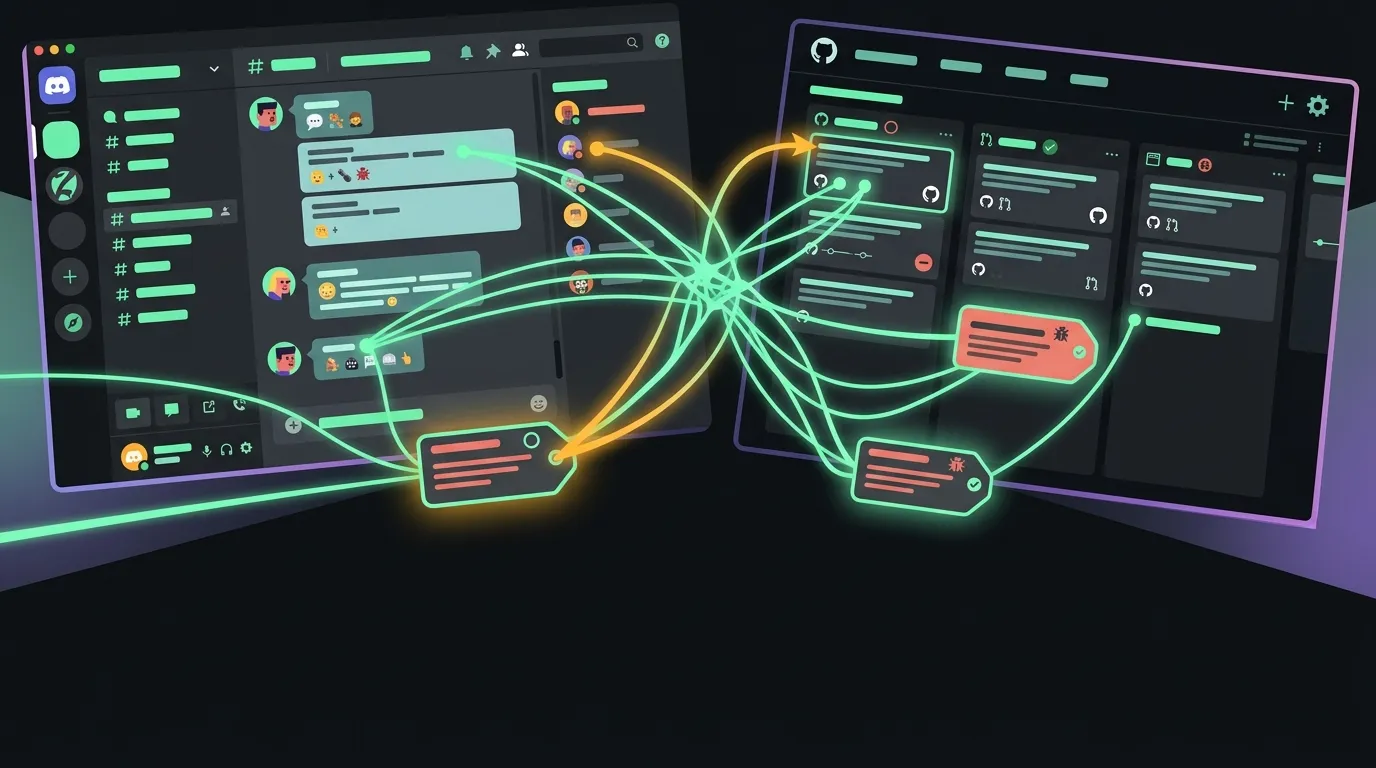
For instance, a user in a Discord channel might comment, “My file sync hangs at 99 percent and never finishes.” In GitHub, the maintainer might have already logged a detailed bug report titled “Websocket block transfer timeout during multi-part payload assembly.” Standard database queries will never connect those two reports because they share zero exact keywords.
SeaTicket uses language models to evaluate the intent and technical context of incoming reports across connected platforms. By indexing past resolutions, documentation, and open tickets across Discord, GitHub, and Notion, the system identifies that both reports refer to the exact same underlying failure mode and links them together automatically in the dashboard.
Human-in-the-loop safeguards in a developer-first queue
One of the biggest risks of introducing AI into open-source community management is the influx of unhelpful automated bots that post hallucinated advice or prematurely close valid bug reports. Developers are notoriously sensitive to canned, inaccurate AI responses in issue trackers.
SeaTicket handles this by enforcing strict human-in-the-loop safeguards. When a new ticket or Discord query arrives, the system analyzes existing knowledge bases and past resolutions to draft a suggested response and proposed triage steps. However, it never posts to public channels, sends emails, or alters ticket statuses without explicit approval from a maintainer.
[ Incoming Discord Comment / GitHub Issue ]
 │
 ▼
 [ SeaTicket AI Agent Analyzes Context ]
 - Searches past resolutions & linked repos
 - Matches semantic duplicates
 - Drafts recommended response & action
 │
 ▼
 [ Maintainer Approval Queue ]
 - Review proposed resolution
 - Approve, edit, or reject action
 │
 ▼
[ Verified Action Executed across GitHub/Discord ]
This human-in-the-loop architecture lets maintainers clear triage backlogs in seconds without surrendering project voice or technical precision to an unmonitored bot. By installing the official SeaTicket GitHub App, engineering teams can manage the queue directly alongside their existing repository workflows.
Pricing, availability, and the verdict
SeaTicket is available now with a free tier specifically designed for open-source maintainers, small development teams, and community projects. Unlike legacy helpdesk solutions that lock essential features behind steep per-seat monthly subscriptions, the platform avoids restrictive per-user pricing tiers so small maintainer teams can onboard collaborators without unexpected bills.
For open-source maintainers drowning in duplicate issues across Discord and GitHub, SeaTicket strikes the right balance. It removes the mental tax of manual cross-referencing while keeping humans firmly in control of project communications. If your community has grown beyond what a raw GitHub Issues tab can comfortably manage, SeaTicket is worth adding to your stack.